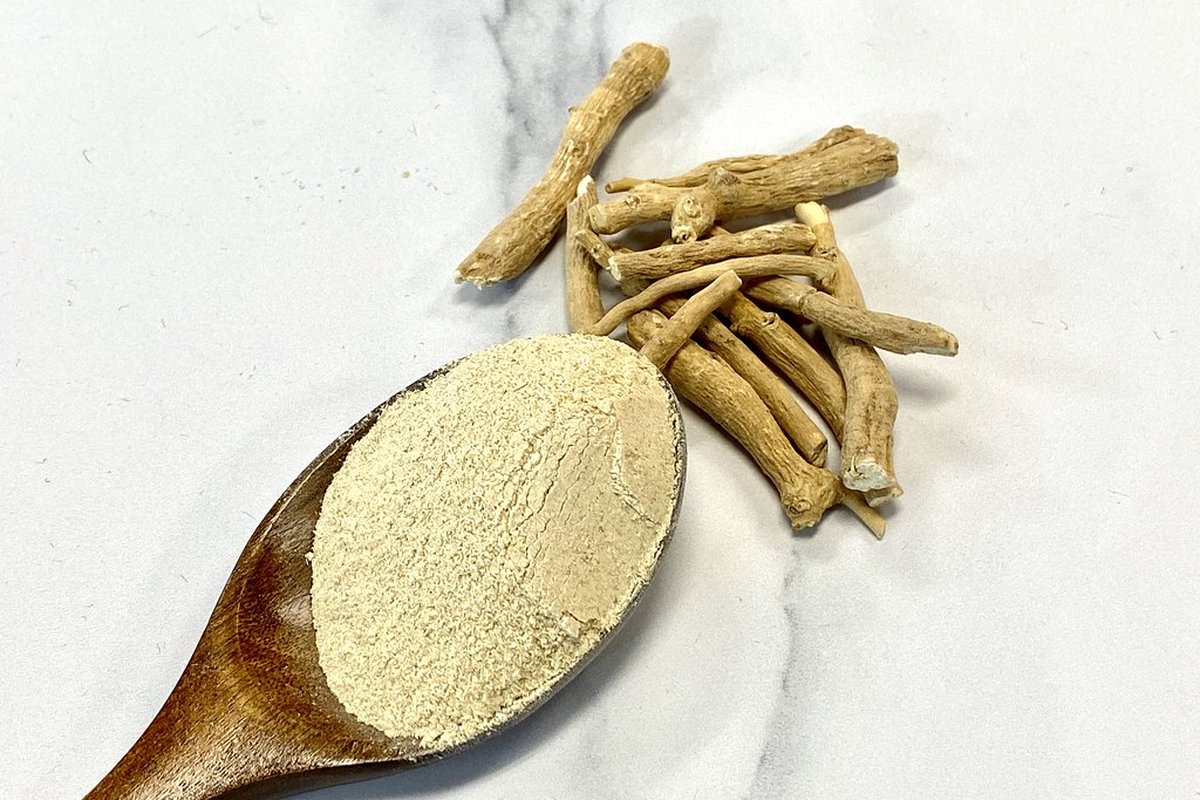

Ashwagandha (Withania somnifera) is a root used in Ayurvedic practice for generations, and it is now one of the more heavily studied adaptogens in Western supplement research. Before we recommend any specific product, we run the same three-part check every time: is the extract standardized, is the withanolide content disclosed, and is the dose actually the one used in the studies people cite. Most of the disappointment people report with ashwagandha traces back to one of those three boxes being unchecked, not to the herb itself.
Check one: is it a standardized extract
Raw ashwagandha powder and a standardized root extract are not the same product, even when they sit on the same shelf. Standardization means a lab has confirmed the extract contains a consistent percentage of withanolides, the compounds researchers believe are doing the work. A label that just says "ashwagandha root powder" with no extraction ratio or standardization claim is telling you less than it should.
Check two: does the label state a withanolide percentage
Look for a specific number, commonly somewhere in the 1.5 percent to 5 percent range depending on the extract type. If a label only says "proprietary ashwagandha blend" with no percentage and no milligram dose, there is no way to compare it to the studies, and no way to know if you are getting a clinically relevant amount or a token sprinkle.
Check three: does the dose match what was actually studied
Most of the published trials use somewhere between 240 and 600 milligrams of standardized extract daily, over eight to twelve weeks, with participants generally reporting lower self-reported stress and modestly better sleep. Trial sizes are still fairly small, usually under 100 people, so treat the evidence as promising and directional rather than settled science. If a product's dose falls well outside that range in either direction, that is worth noticing.
Who should talk to a doctor first
- Anyone who is pregnant or breastfeeding
- Anyone on thyroid medication, since ashwagandha may affect thyroid hormone levels
- Anyone on sedatives or blood pressure medication, due to possible interactions
Calm Response Capsules
Calm Response Capsules state a standardized extract and disclose the withanolide percentage on the panel instead of folding it into an unlabeled blend, which is the exact thing our checklist above is looking for.
See Current PriceEven with a clean label, ashwagandha is not a fast-acting supplement. Most people who report a real difference took it daily for four to six weeks before deciding whether it was working, so build in that runway before judging results.
These statements have not been evaluated by the Food and Drug Administration. This product is not intended to diagnose, treat, cure, or prevent any disease.